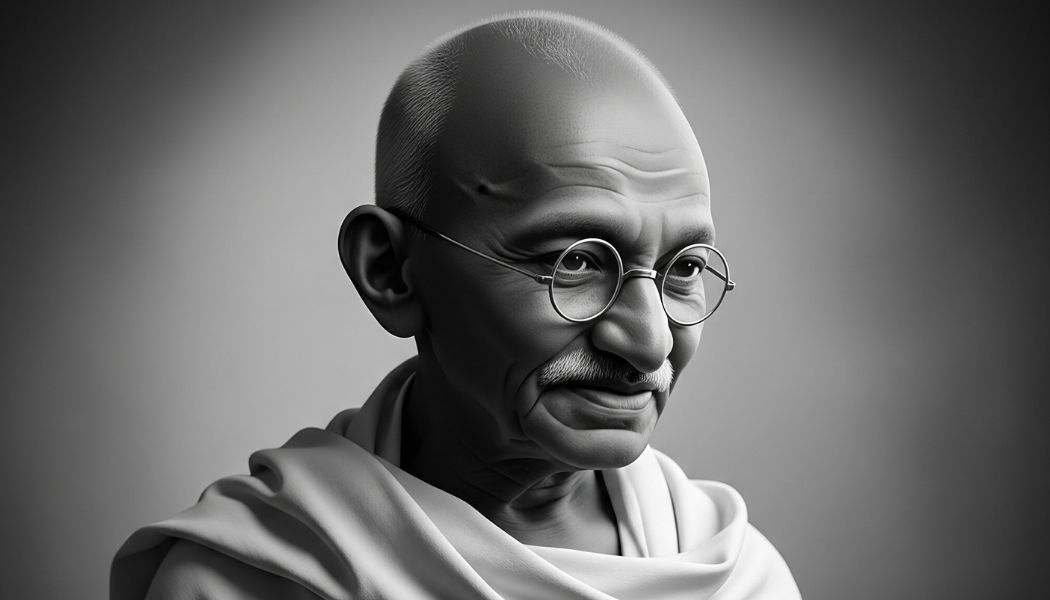
Subhash Chandra Bose: 10 Remarkable Truths About a Tragic Hero
Table of Contents
Subhash Chandra Bose stands as one of the most enigmatic and influential figures in India’s struggle for independence. Known by the honorific Netaji, his life was a whirlwind of political defiance, military ambition, and unyielding patriotism. While Mahatma Gandhi’s philosophy of non-violence paved a powerful path to freedom, Bose’s radical, more confrontational approach offered an alternative vision, creating a complex and often contradictory legacy. His unwavering belief in armed resistance against the British Empire and his controversial alliances with Axis powers during World War II make him a figure of both immense admiration and intense debate. From his early days as a bright student to his leadership of the Indian National Army (INA), every chapter of his life is filled with drama, sacrifice, and a burning desire for a free India. This post delves into the lesser-known aspects of his life, examining the triumphs that solidified his heroic status and the mysteries that continue to shroud his tragic end. We will explore the truths behind the man, the myths surrounding his disappearance, and the enduring impact of Subhash Chandra Bose.
The Formative Years of Subhash Chandra Bose
To understand Netaji, one must first grasp the foundations of his character. Born on January 23, 1897, in Cuttack, Odisha, Subhash Chandra Bose was a brilliant student from a young age. His academic prowess was evident when he passed the Indian Civil Service (ICS) examination in 1920, securing the fourth rank. The ICS was the highest civilian service under British rule, and a position within it was a coveted ticket to a comfortable and prestigious life. However, for a young man with a burgeoning sense of nationalism, such a career was a moral compromise. In a bold act of defiance, he resigned from the ICS, a decision that shocked many but cemented his dedication to the cause of India’s freedom. This pivotal moment set the course for his life, proving that his convictions were far more valuable to him than personal gain. His early mentors, including Chittaranjan Das, further shaped his political thinking, instilling in him a deep commitment to social justice and political independence. The ideological and philosophical roots of Subhash Chandra Bose were firmly planted in the soil of radical nationalism, and his early experiences prepared him for the tumultuous journey ahead.
The Rise of Subhash Chandra Bose as a Political Leader
Upon his return to India, Subhash Chandra Bose quickly became an active and vocal member of the Indian National Congress. His radical views often put him at odds with the more moderate leadership, particularly Mahatma Gandhi and Jawaharlal Nehru. He believed that non-violent, non-cooperation movements were insufficient to oust the British. Instead, he advocated for a more aggressive, uncompromising approach, arguing that freedom was a right that had to be seized, not requested. This difference in ideology led to a series of confrontations and a notable split within the Congress.
In 1938, he was elected as the President of the Indian National Congress at the Haripura Session. The following year, despite facing opposition from the Gandhian faction, he was re-elected for the Tripuri Session. This victory demonstrated his immense popularity and the support he had among the younger, more radical members of the party. However, the internal political turmoil became untenable, and he eventually resigned from the presidency. He went on to form the All India Forward Bloc in 1939, a political party that sought to unite all radical elements within the Congress and lead the country toward a more direct and forceful confrontation with the British. This period marked the transformation of Subhash Chandra Bose from a respected politician into a revolutionary leader.
He believed that India’s opportunity for independence lay in exploiting Britain’s weakness during World War II. While many in the Congress were sympathetic to the Allied cause, Bose saw the war as a golden chance to strike. He articulated his vision in his writings and speeches, arguing that external assistance was crucial for a successful rebellion. His famous mantra, “Give me blood, and I shall give you freedom!” was a call to arms that resonated with millions of Indians, inspiring them to be willing to sacrifice everything for their nation’s liberty. The political career of Subhash Chandra Bose was defined by his unwavering resolve and his willingness to challenge the status quo, even if it meant alienating those who shared his ultimate goal of a free India.
The Bold Escape: A Strategic Move by Subhash Chandra Bose
In 1941, under house arrest by the British, Subhash Chandra Bose executed one of the most daring escapes in modern history. Disguised as a Pathan, he slipped out of his Calcutta home and embarked on a perilous journey across India, Afghanistan, and the Soviet Union. His destination was Germany, where he hoped to secure support from the Axis powers. This audacious act demonstrated his cunning and his relentless commitment to his cause. It also marked the beginning of his journey as a global revolutionary, a man willing to forge controversial alliances for the sake of his country’s freedom.
His collaboration with Germany and later Japan was a pragmatic decision born of his belief that “an enemy’s enemy is a friend.” He was not an admirer of Nazi ideology but saw the Axis nations as the only ones willing to provide the military and political support needed to fight the British. While this move remains a contentious point of debate, it highlights the desperate circumstances and the bold strategic thinking that defined the actions of Subhash Chandra Bose.
The Formation and Legacy of the Indian National Army (INA)
Once in Southeast Asia, Subhash Chandra Bose took command of the Indian National Army (INA), a force largely composed of Indian prisoners of war captured by the Japanese. With the famous battle cry of “Chalo Dilli!” (March to Delhi!), Netaji re-energized the INA, transforming a demoralized group of soldiers into a disciplined, motivated fighting force. The INA’s motto was Unity, Faith, and Sacrifice, and its ranks included not only men but also women, organized into the Rani of Jhansi Regiment, a groundbreaking initiative for its time.
The INA’s campaign was a challenging one, fighting alongside the Japanese against the British and their allies in Burma and northeastern India. Despite early successes, the INA’s advance was eventually halted by a combination of logistical failures, harsh weather, and fierce British resistance. Although the INA’s military campaign did not achieve its goal of liberating India, its impact was profound. The INA trials held by the British in 1945-46 galvanized Indian public opinion, turning the soldiers into national heroes and sparking widespread protests against the British Raj. The story of the INA, led by Subhash Chandra Bose, became a powerful symbol of Indian patriotism and a source of inspiration for future generations.
The legacy of the INA extended far beyond the battlefield. It demonstrated that Indians could and would fight for their freedom, shattering the myth of British military invincibility. It also highlighted the deep-seated loyalty that many Indians felt for their country, a loyalty that transcended religious and regional divisions. The INA had Hindu, Muslim, and Sikh soldiers fighting together under one banner, showcasing a secular unity that was a powerful counter-narrative to the British policy of divide and rule. The enduring image of Subhash Chandra Bose as the supreme commander of this force is a testament to his charismatic leadership and his ability to unite people from all walks of life under a common cause.
The Enduring Mystery of Subhash Chandra Bose’s Disappearance
The final chapter of Subhash Chandra Bose’s life is perhaps the most debated and controversial. On August 18, 1945, a plane carrying Netaji reportedly crashed in Taihoku (modern-day Taipei), Taiwan. The Japanese government at the time announced his death in the crash, and his ashes were later kept at the Renkōji Temple in Tokyo. However, many in India, including his own family members, refused to believe this account.
Over the decades, numerous theories have emerged, ranging from the plausible to the fantastical. Some believe he survived the crash and lived in secret in the Soviet Union. Others suggest he returned to India and lived as an ascetic known as Gumnami Baba. These theories are fueled by the lack of conclusive evidence and the deep emotional connection many Indians feel toward him. The successive governments of India have appointed several commissions of inquiry, including the Shah Nawaz Commission, the Khosla Commission, and the Mukherjee Commission, to investigate his disappearance. While most of these commissions concluded that he died in the plane crash, their findings have been met with skepticism and rejection by a significant portion of the public.
The mystery surrounding his death has become a part of his legend. It reflects the hope and refusal to accept the loss of a hero who was seen as the last, best chance for India’s freedom. The debate over the fate of Subhash Chandra Bose continues to this day, with new information and theories occasionally surfacing. This unresolved ending only adds to his mystique, ensuring that he remains a topic of fascination and a source of national pride. The enigmatic end to the life of Subhash Chandra Bose has transformed him from a historical figure into a timeless icon.
The Complex Legacy of Subhash Chandra Bose
The legacy of Subhash Chandra Bose is a multifaceted one, marked by both profound admiration and sharp criticism. He is celebrated as a fearless patriot who chose the path of ultimate sacrifice for his nation. His military strategies, his political defiance, and his unwavering commitment to freedom have inspired countless individuals. He is revered for his radical vision and his ability to challenge the established norms of the freedom struggle.
However, his legacy is not without its controversial aspects. His collaboration with fascist regimes like Nazi Germany and Imperial Japan during World War II has drawn heavy criticism. Historians debate whether his “enemy’s enemy” strategy was a pragmatic necessity or a dangerous gamble that risked aligning India with brutal, genocidal forces. Some argue that his actions gave ammunition to the British to discredit the Indian independence movement, while others contend that his efforts were a desperate measure in a desperate time.
Regardless of the debates, one cannot deny the immense impact of Subhash Chandra Bose on Indian history. His willingness to pursue a different path forced the British to take the Indian freedom movement more seriously. The INA trials, in particular, shook the foundations of the British Raj, exposing the deep-seated discontent within the Indian armed forces and hastening the process of decolonization. He remains a powerful symbol of national honor and courage, a reminder that the fight for freedom often requires unconventional and difficult choices. The enduring legacy of Subhash Chandra Bose is a testament to the complexities of history and the power of a single individual to inspire a nation.
The Ideals and Vision of Subhash Chandra Bose
Beyond his military exploits, Subhash Chandra Bose was a man of strong ideals and a clear vision for a free India. He was a socialist at heart, advocating for economic equality and social justice. He believed that political freedom was meaningless without the economic liberation of the masses. In his presidential address at the Haripura session, he outlined his vision for a post-independence India, emphasizing the need for industrialization, national planning, and a strong public sector. He was a staunch opponent of communalism and worked tirelessly for Hindu-Muslim unity, a principle he ingrained in the secular structure of the Indian National Army.
His speeches and writings reflect a deep philosophical commitment to the idea of a united, strong, and self-reliant India. He believed in the power of youth and instilled in them a sense of purpose and a spirit of sacrifice. His vision was not limited to political freedom; it extended to a complete societal and economic transformation. He saw a free India as a vibrant, modern nation that would take its rightful place on the world stage. The intellectual and ideological contributions of Subhash Chandra Bose are often overshadowed by his more dramatic actions, but they are equally significant.
He was a great admirer of Swami Vivekananda and was deeply influenced by his teachings on nationalism and self-reliance. This spiritual dimension to his political life gave his struggle a deeper meaning, transforming it from a mere political battle into a righteous cause. He believed that nationalism was a spiritual force that could unify a fragmented society and guide it toward a common destiny. The holistic vision of Subhash Chandra Bose for India was a powerful blend of political, social, and spiritual ideals.
A Global Perspective on Subhash Chandra Bose
The story of Subhash Chandra Bose is not just an Indian story; it is a global one. His journey across continents and his alliances with world leaders placed him at the center of a complex international political landscape. His efforts to secure foreign support for India’s independence were groundbreaking and set a precedent for future nationalist movements. He was a diplomat, a strategist, and a revolutionary who operated on the world stage, and his actions had a ripple effect beyond India’s borders.
He traveled to Germany, where he met with Nazi leaders, and to Japan, where he gained the support of Prime Minister Hideki Tōjō. These meetings, while controversial, demonstrate his determination to use any means necessary to achieve his goal. His broadcasts from Berlin to India, under the guise of “Radio Free India,” kept the spirit of rebellion alive among the Indian populace. He was a master of propaganda and a charismatic speaker who could sway public opinion both at home and abroad. The international dimension of the life of Subhash Chandra Bose highlights his unique role in the global fight against colonialism.
His actions also had a significant impact on the post-war world order. The INA trials, in particular, highlighted the hypocrisy of the Allied powers, who fought against fascism abroad while maintaining their colonial empires at home. The trials exposed the deep cracks in the British Empire, signaling that its end was imminent. The legacy of Subhash Chandra Bose is thus inextricably linked to the broader history of decolonization and the emergence of a new world order.
The Posthumous Recognition of Subhash Chandra Bose
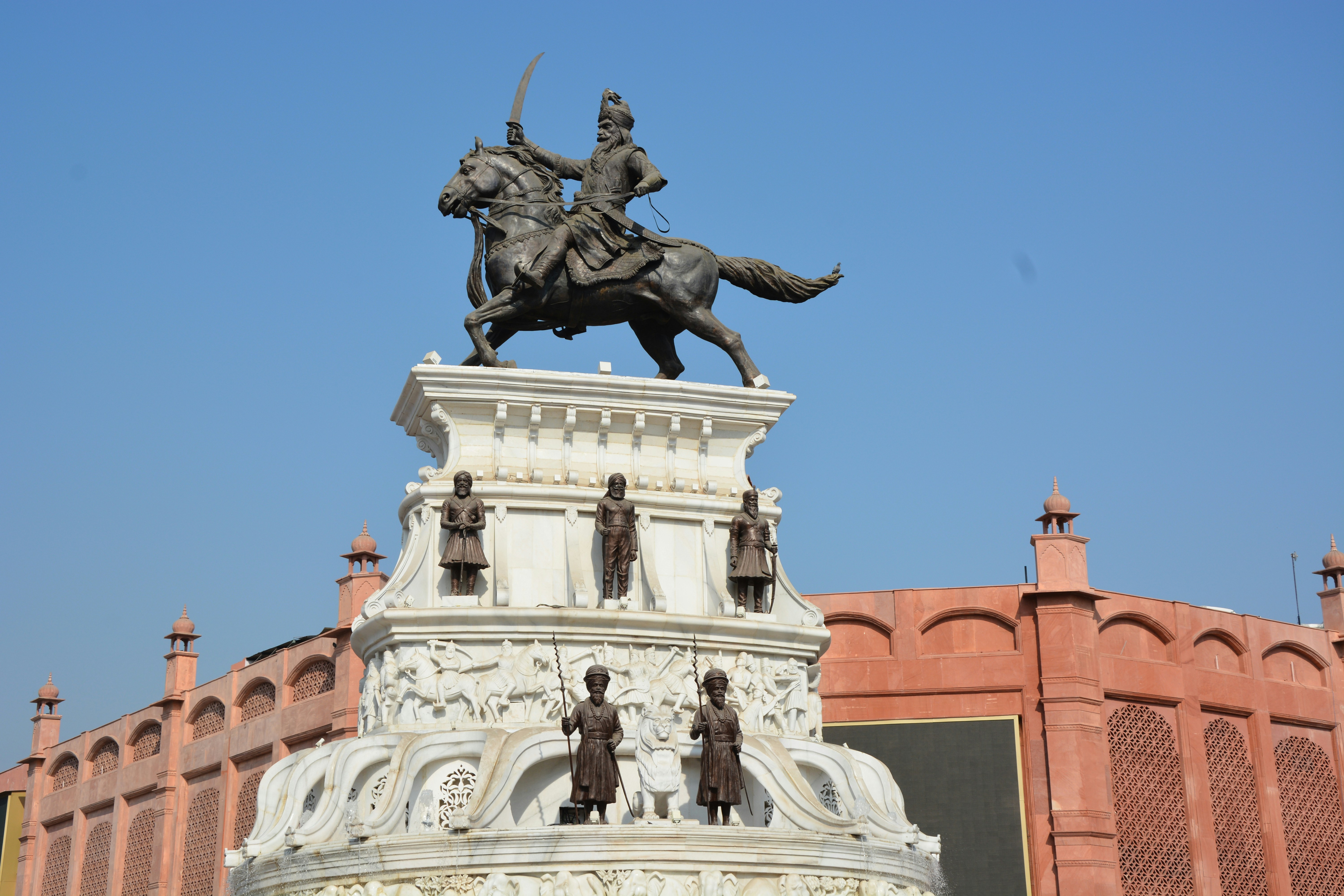
Decades after his disappearance, Subhash Chandra Bose continues to be a revered figure in India. He has been honored with numerous memorials, statues, and institutions named after him. His birth anniversary on January 23 is celebrated as “Parakram Diwas” (Day of Valor) in India, a testament to his heroic status. The Indian government has also declassified files related to his disappearance, though the findings have done little to quell the public’s curiosity and a sense of unresolved mystery.
The Indian armed forces, in particular, hold him in high regard. The INA’s legacy lives on in their traditions and ethos. The courage and sacrifice of the INA soldiers, led by Netaji, are a source of pride and inspiration for them. He is a symbol of self-respect and defiance against foreign rule, a reminder of the price paid for freedom. The posthumous honors bestowed upon Subhash Chandra Bose reflect the nation’s gratitude and admiration for his unparalleled contribution to the freedom struggle.
His story continues to be told in books, documentaries, and films, ensuring that his legacy is passed down from one generation to the next. The mystery surrounding his death and the controversy surrounding his alliances only add to the allure of his story, making him a subject of endless fascination. The lasting impact of Subhash Chandra Bose on the national psyche is a powerful reminder of his enduring relevance.
The Impact of Subhash Chandra Bose on Indian Society
The influence of Subhash Chandra Bose on Indian society is immense and multifaceted. He was a symbol of unyielding courage and a beacon of hope for millions who had lost faith in the possibility of freedom. His call to arms inspired many to join the struggle, and his inclusive vision for the INA demonstrated the possibility of a united, secular India. He was a great motivator who could inspire ordinary people to perform extraordinary acts of bravery.
His emphasis on youth empowerment and his focus on economic justice laid the groundwork for many of the policies adopted in post-independence India. He was a forward-thinking leader who saw the need for a modern, industrialized India that could compete on the world stage. His vision was not limited to the political realm; it extended to a complete transformation of Indian society. The social and political ideals of Subhash Chandra Bose continue to resonate with many, making him a powerful and relevant figure even today.
His legacy is also a source of pride for the people of Bengal, his home state. He is a local hero who achieved international recognition, and his story is a source of inspiration for many young people in the region. The cultural impact of Subhash Chandra Bose is evident in the songs, poems, and plays that celebrate his life and sacrifice.
The Philosophical Contributions of Subhash Chandra Bose
While often celebrated for his actions, the philosophical contributions of Subhash Chandra Bose are equally significant. He was a profound thinker who blended Western and Indian ideologies to create a unique vision for India. He was a great admirer of Hegelian philosophy and believed in the dialectical process of history, where a thesis and antithesis would lead to a new synthesis. He saw the Indian freedom struggle as a similar process, where the clash between the British Empire and the Indian nationalist movement would lead to a new, free India.
He was also deeply influenced by the teachings of Sri Ramakrishna Paramahansa and Swami Vivekananda, which gave his political struggle a spiritual dimension. He believed that true nationalism was not just a political movement but a spiritual awakening, a force that could unite a fragmented society and guide it toward a common destiny. The intellectual and philosophical legacy of Subhash Chandra Bose is a rich and complex one that deserves more attention.
His writings, including “The Indian Struggle,” provide a window into his political and philosophical thought. They reveal a man who was not only a man of action but also a deep thinker who was constantly grappling with the challenges of his time. The ideas of Subhash Chandra Bose on nationalism, socialism, and spiritualism continue to be studied and debated by scholars around the world.
The Human Side of Subhash Chandra Bose
Behind the larger-than-life persona of Netaji was a man with a deep sense of compassion and a love for his country. He was a man of great personal sacrifice, who gave up a comfortable life and personal relationships for the sake of his nation. He was a devoted son, a loving brother, and a compassionate leader who cared deeply for his soldiers. His relationship with his wife, Emilie Schenkl, and their daughter, Anita Bose Pfaff, highlights the personal sacrifices he made for his cause.
The personal life of Subhash Chandra Bose is a testament to the human side of the great hero. He was not just a political leader but a man who grappled with the same emotions and dilemmas as any other human being. The letters he wrote to his family reveal a man who was deeply committed to his ideals but also a man who missed his loved ones. The human story of Subhash Chandra Bose is a powerful one that makes his heroic deeds even more relatable and inspiring.
The Ever-Relevant Subhash Chandra Bose
In an age of political and social fragmentation, the life and legacy of Subhash Chandra Bose are more relevant than ever. His unwavering commitment to a united, secular India is a powerful message for a nation that continues to grapple with communal divisions. His call for self-reliance and economic justice is a timely reminder of the need for an equitable society. His courage in the face of insurmountable odds is an inspiration for all those who are fighting for a just cause.
The story of Subhash Chandra Bose is not just a tale from the past; it is a blueprint for the future. It is a reminder that freedom is a constant struggle and that it requires courage, sacrifice, and an unwavering belief in a better tomorrow. The enduring relevance of Subhash Chandra Bose lies in his ability to inspire future generations to fight for their rights and to build a better world.
External Link Suggestions
To provide readers with a comprehensive and authoritative perspective on Subhash Chandra Bose, here are some highly recommended external links:
- Netaji Research Bureau: A dedicated institution founded by his brother Sarat Chandra Bose, the bureau in Kolkata is a treasure trove of archival material, letters, and documents related to Netaji’s life. It is an essential resource for anyone seeking to understand his life and work.
- National Archives of India: This government body holds a vast collection of declassified files related to the Indian independence movement, including those pertaining to the INA and the disappearance of Subhash Chandra Bose. This is a great resource for serious researchers.
- BBC History: The British Broadcasting Corporation has produced numerous documentaries and articles on Netaji’s life, offering a non-Indian perspective on his actions and alliances. It provides a balanced view of his relationship with the British Raj and his role in World War II.
- The Print, India: This Indian digital media company has conducted extensive research and published several articles on the mysteries surrounding his disappearance, including the declassified files and the findings of various commissions.