Mahatma Gandhi: 7 Shocking Facts & Inspiring Legacy
Table of Contents
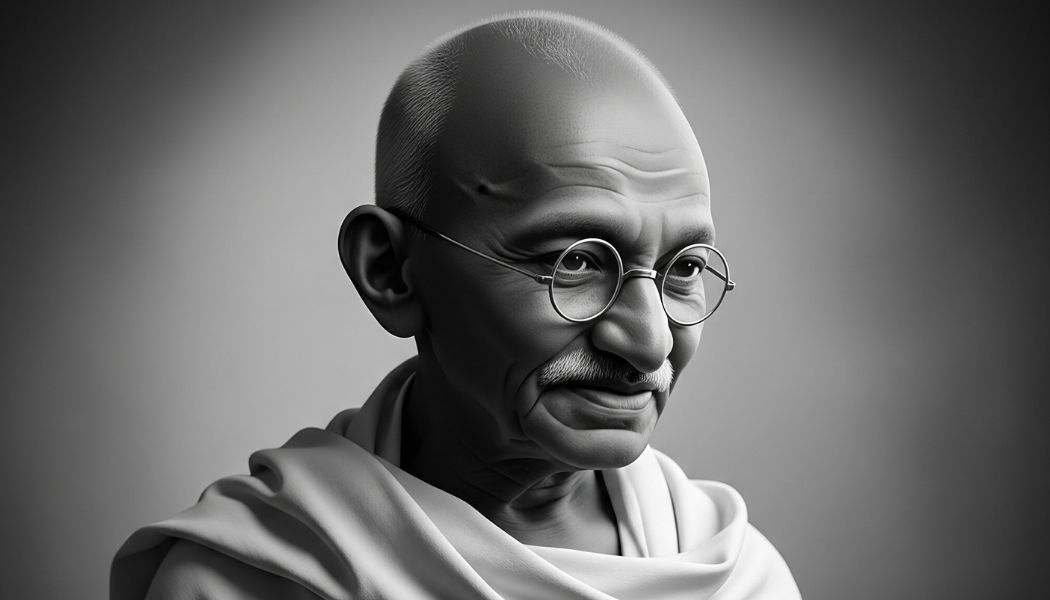
Mahatma Gandhi, a name synonymous with peace, non-violent resistance, and Indian independence, remains one of history’s most influential figures. His philosophy of Satyagraha, his unwavering commitment to social justice, and his pivotal role in leading India to freedom have inspired movements for civil rights and liberation across the globe. However, the life of Mahatma Gandhi was also marked by complexities, contradictions, and events that might shock those familiar only with the sanitized version often presented. This post delves into the multifaceted life of Mahatma Gandhi, exploring seven surprising facts alongside his enduring and inspiring legacy.
The Formative Years of Mahatma Gandhi
The early life of Mahatma Gandhi, born Mohandas Karamchand Gandhi in Porbandar, Gujarat, on October 2, 1869, played a crucial role in shaping his future ideals. His father served as the Diwan (chief minister) of Porbandar, and his mother, Putlibai, was a deeply religious woman whose piety and devotion left a lasting impression on young Mahatma Gandhi. This early exposure to different faiths and the principles of Jainism, particularly Ahimsa (non-violence) and Satya (truth), significantly influenced his later philosophy.
Mahatma Gandhi’s initial schooling was unremarkable, and he later described himself as a shy and mediocre student. However, a significant turning point in his early life was his marriage at the age of 13 to Kasturbai Mohandas Kapadia. Their relationship, though initially traditional, evolved into a partnership of mutual respect and support, with Kasturbai playing an increasingly important role in Mahatma Gandhi’s social and political activism.
In 1888, Mahatma Gandhi travelled to England to study law. This period exposed him to Western thought, including the writings of Henry David Thoreau and Leo Tolstoy, which further solidified his beliefs in non-violent resistance and simple living. His experiences with racial prejudice in England and later in South Africa also played a critical role in shaping his commitment to fighting injustice and discrimination.
Shocking Fact 1: Mahatma Gandhi Was Not Always a Pacifist
While Mahatma Gandhi is universally recognized as a champion of non-violence, his early views on conflict were surprisingly different. During the Second Boer War (1899-1902) and the Zulu War (1906), Mahatma Gandhi actively encouraged Indians in South Africa to join the British efforts. He believed that by supporting the British Empire in times of need, Indians could claim their rights and citizenship more effectively.
Mahatma Gandhi even formed and led an ambulance corps composed of Indians to serve the British forces. This active participation in war efforts stands in stark contrast to his later unwavering advocacy for non-violent resistance. This early phase highlights the evolution of Mahatma Gandhi’s philosophy and his initial belief in strategic cooperation with the existing power structures.
The South African Experience and the Birth of Satyagraha for Mahatma Gandhi
Mahatma Gandhi’s 21 years in South Africa (1893-1914) were pivotal in the development of his political thought and his philosophy of Satyagraha. He arrived in South Africa as a young lawyer and was immediately confronted with the harsh realities of racial discrimination and segregation. His personal experiences of being denied basic rights, such as being thrown off a train for refusing to move to a third-class compartment despite holding a first-class ticket, ignited his determination to fight against injustice.
It was in South Africa that Mahatma Gandhi first began to experiment with non-violent resistance as a tool for social and political change. He organized the Indian community to protest against discriminatory laws through peaceful demonstrations, civil disobedience, and boycotts. This period saw the birth and evolution of Satyagraha, a philosophy rooted in truth force and soul force, which became the hallmark of Mahatma Gandhi’s leadership.
The struggles in South Africa provided Mahatma Gandhi with invaluable experience in organizing mass movements, negotiating with authorities, and enduring hardship and imprisonment for his beliefs. His time in South Africa laid the foundation for his future role in the Indian independence movement and his global influence as an apostle of non-violence.
Shocking Fact 2: Mahatma Gandhi Lived a Highly Austere Lifestyle by Choice
Mahatma Gandhi’s commitment to simple living and self-sufficiency was profound. He consciously adopted an austere lifestyle, giving up material comforts and embracing manual labor. He believed that this was essential for both personal and spiritual growth, as well as a way to identify with the poorest sections of society.
Mahatma Gandhi famously spun his own cloth on a charkha (spinning wheel), promoting khadi (handspun and handwoven cloth) as a symbol of self-reliance and resistance against British industrialization. He also embraced vegetarianism and experimented with various dietary restrictions, often fasting for spiritual and political purposes.
Living in simple ashrams (communities) with his followers, Mahatma Gandhi adhered to a strict routine of prayer, work, and communal living. This deliberate choice of austerity, while inspiring to many, could also be seen as extreme and demanding, highlighting the intensity of Mahatma Gandhi’s convictions.
The Return to India and the Indian Independence Movement Under Mahatma Gandhi
Mahatma Gandhi returned to India in 1915 and quickly became involved in the Indian nationalist movement. His experiences in South Africa had forged him into a seasoned political activist with a unique philosophy and a proven track record of mobilizing people for social and political change.
Under the leadership of Mahatma Gandhi, the Indian National Congress transformed into a mass-based organization, drawing in people from all walks of life, including peasants, workers, and women. He launched a series of non-violent movements against British rule, including the Non-Cooperation Movement (1920-1922), the Civil Disobedience Movement (1930-1934), and the Quit India Movement (1942).
Mahatma Gandhi’s leadership was characterized by his ability to connect with the masses, his powerful moral authority, and his unwavering commitment to non-violence even in the face of brutal repression by the British authorities. His iconic Salt March in 1930, protesting the British salt tax, became a powerful symbol of India’s struggle for independence and captured the world’s attention.
Shocking Fact 3: Mahatma Gandhi’s Views on Caste Were Initially Complex and Evolving
While Mahatma Gandhi became a strong advocate for the rights of the untouchables (whom he called Harijans, meaning “children of God”), his early views on the caste system were more complex and reflected the prevailing social norms of his time. Initially, Gandhi did not advocate for the complete abolition of the caste system but rather sought to reform it by removing the practice of untouchability and promoting equality within the existing framework.
Over time, influenced by his interactions with Dalit leaders like B.R. Ambedkar and his growing understanding of the deep-rooted injustice of the caste system, Gandhi’s views evolved significantly. He became a vocal critic of untouchability and worked tirelessly to integrate Harijans into mainstream society. However, his earlier stance and his sometimes paternalistic approach towards the issue remain a subject of debate and scrutiny.
Mahatma Gandhi’s Philosophy of Satyagraha
At the heart of Mahatma Gandhi’s leadership was his philosophy of Satyagraha, which translates to “truth force.” Satyagraha is a non-violent method of resisting injustice through moral persuasion, self-suffering, and unwavering commitment to truth and non-violence.
Mahatma Gandhi believed that Satyagraha was a powerful tool for social and political change because it appealed to the conscience of the oppressor and aimed to convert them rather than coerce them. It required immense courage, discipline, and a willingness to endure hardship without retaliating with violence.
The principles of Satyagraha include truthfulness, non-violence, self-control, fearlessness, and a belief in the inherent goodness of even the oppressor. Gandhi’s successful application of Satyagraha in South Africa and India demonstrated its potential as a potent force for social and political transformation and inspired numerous non-violent movements for civil rights and justice around the world.
Shocking Fact 4: Gandhi Was Nominated for the Nobel Peace Prize Five Times but Never Received It
Despite his global reputation as an apostle of peace and non-violence, Gandhi was never awarded the Nobel Peace Prize. He was nominated five times between 1937 and 1948, but for various reasons, including procedural technicalities, reservations among the Nobel Committee members, and the timing of his assassination, he never received the prestigious award.
The Nobel Committee later publicly regretted this omission, acknowledging the profound influence of Gandhi on the global discourse of peace and non-violence. His absence from the list of Nobel laureates remains a notable irony, given his enduring legacy as a symbol of peaceful resistance.
The Partition of India and Gandhi’s Anguish
The partition of India in 1947, which led to the creation of Pakistan and widespread communal violence, was a deeply painful event for Gandhi. He had always advocated for a united and inclusive India and was vehemently opposed to the division of the country along religious lines.
Despite his efforts to promote peace and harmony between Hindus and Muslims, the partition proceeded, resulting in mass migrations, bloodshed, and immense human suffering. Mahatma Gandhi spent his final days trying to quell the violence and restore peace in the newly independent India, his dream of a unified and peaceful nation shattered by the realities of communal strife.
His anguish over the partition highlights the limitations of even the most powerful moral authority in the face of deeply entrenched social and political divisions. The events surrounding the partition remain a tragic chapter in Indian history and a stark reminder of the complexities of achieving social and political change.
Shocking Fact 5: Mahatma Gandhi Conducted Unusual Social Experiments in His Ashrams
Mahatma Gandhi’s ashrams were not just places of simple living and spiritual practice; they were also sites for radical social experiments. He challenged conventional social norms by encouraging people from different castes and religions to live and work together. He also advocated for the dignity of manual labor and personally engaged in tasks traditionally considered to be the work of lower castes, such as cleaning toilets.
One of the more controversial aspects of Gandhi’s ashram experiments involved his close interactions with young women, often sleeping in the same room as them. These experiments, which he described as tests of his celibacy and detachment, have been the subject of much debate and criticism, with some questioning his motives and the appropriateness of such practices.
Mahatma Gandhi’s Assassination and Enduring Legacy
On January 30, 1948, Mahatma Gandhi was assassinated in Delhi by Nathuram Godse, a Hindu nationalist who opposed his advocacy for Hindu-Muslim unity and his acceptance of the partition. His assassination sent shockwaves across India and the world, marking the tragic end of a remarkable life dedicated to peace and social justice.
Despite the controversies and criticisms that have emerged over time, Gandhi’s legacy remains profound and enduring. His philosophy of Satyagraha has inspired countless movements for civil rights and social change, including Martin Luther King Jr.’s fight for racial equality in the United States and Nelson Mandela’s struggle against apartheid in South Africa.
Mahatma Gandhi’s emphasis on non-violence, truth, and simple living continues to resonate with people around the world who seek alternatives to violence and materialism. His life and teachings serve as a powerful reminder of the transformative potential of moral leadership and the enduring power of non-violent resistance in the face of oppression and injustice.
Shocking Fact 6: Mahatma Gandhi Was a Prolific Writer and Communicator
Beyond his political activism, Gandhi was an exceptionally prolific writer and communicator. He wrote extensively on a wide range of topics, including politics, philosophy, religion, social issues, and personal reflections. His writings include books such as “Hind Swaraj” (Indian Home Rule), his autobiography “The Story of My Experiments with Truth,” and numerous articles, letters, and speeches.
Mahatma Gandhi was also a skilled communicator who effectively used various media to disseminate his ideas and mobilize public opinion. He edited several newspapers, including “Indian Opinion” in South Africa and “Young India” and “Harijan” in India, which served as powerful platforms for his message. His ability to connect with people through his writings and speeches was crucial to the success of his political and social movements.
The Global Influence of Gandhi
Mahatma Gandhi’s influence extends far beyond India. His philosophy of non-violent resistance has inspired social and political movements for justice and equality in numerous countries. Leaders like Martin Luther King Jr., James Lawson, and Nelson Mandela explicitly acknowledged the profound impact of Mahatma Gandhi’s teachings on their own struggles.
His ideas on simple living, self-sufficiency, and the importance of ethical means in achieving political ends continue to be relevant in contemporary discussions about sustainable development, social justice, and conflict resolution. Mahatma Gandhi’s legacy as a global icon of peace and non-violence endures, inspiring individuals and movements striving for a more just and peaceful world.
Shocking Fact 7: Mahatma Gandhi Never Formally Received a Major Political Office
Despite being the central figure in India’s independence movement and widely regarded as the father of the nation, Mahatma Gandhi never held a formal political office in independent India. He consciously chose to remain outside the formal structures of power, preferring to guide the nation through his moral authority and his ability to mobilize public opinion.
Gandhi believed that true power lay in the hands of the people and that his role was to empower them and to hold those in power accountable to the principles of justice and non-violence. His decision to remain outside formal office reflects his deep distrust of centralized power and his commitment to a more decentralized and morally grounded political system.
The Enduring Complexity of Mahatma Gandhi
The life of Gandhi was a complex tapestry of profound ideals, unwavering commitment, and surprising contradictions. While his inspiring legacy as a champion of non-violence and social justice endures, exploring the lesser-known aspects of his life reveals a more nuanced and human figure. From his early support for the British war efforts to his evolving views on caste and his controversial ashram experiments, the life of Mahatma Gandhi continues to be a subject of intense study and debate.
Ultimately, Mahatma Gandhi’s enduring significance lies in his profound impact on the 20th century and his continued relevance in the 21st century. His philosophy of Satyagraha remains a powerful tool for those seeking to resist oppression and injustice through peaceful means. By understanding the full spectrum of his life, including the shocking facts and the inspiring legacy, we can gain a deeper appreciation for the complexities of this extraordinary leader and his lasting contribution to the world.
Best External Links:
Official Mahatma Gandhi Websites/Museums:
- Gandhi Smriti and Darshan Samiti (Official website of the place where Mahatma Gandhi spent his last 144 days)
- National Gandhi Museum, Delhi
- The Collected Works of Mahatma Gandhi (Digitized source of his writings)
Academic Resources:
- Stanford University’s Martin Luther King, Jr. Research and Education Institute (Connections to non-violence):
- The Gandhi Center for Peace and Justice at James Madison University
Historical and Informational Websites:
- National Portal of India (Government resource with historical information)
- Britannica – Mahatma Gandhi
- BBC History – Mahatma Gandhi